Ngorongoro Crater
A collapsed volcano with a floor full of animals. A day in Ngorongoro Crater is one of the best chances in Tanzania to see black rhino, and it fits into almost any safari.
What makes the crater different
Ngorongoro Crater is one of the largest unbroken volcanic calderas in the world. It lies inside the Ngorongoro Conservation Area, a UNESCO World Heritage Site. Steep walls surround a floor of grassland, swamp, forest and a soda lake, and plenty of animals live there all year.
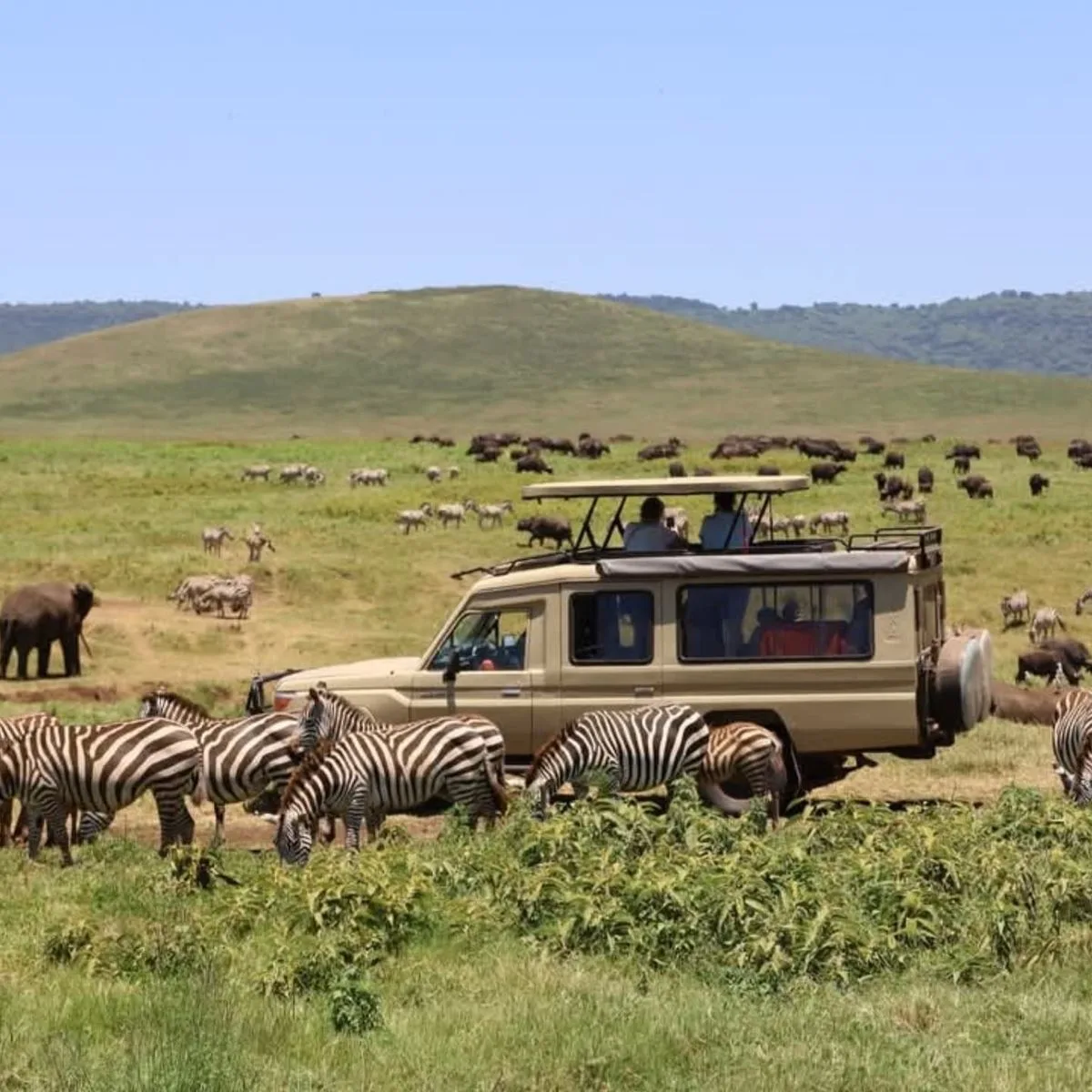
Because the area is small and open, you see a lot in a few hours: wildebeest, zebras, buffaloes, lions, spotted hyenas, elephants and, with patience, black rhino. Flamingos often feed in Lake Magadi on the crater floor. Unlike most national parks, Maasai families live in the Conservation Area and graze their cattle there.
How a crater day works
We drive down the crater road early, spend the day on the floor and climb back out in the afternoon. Many guests do the crater on the last day of their safari, on the way back to Arusha.
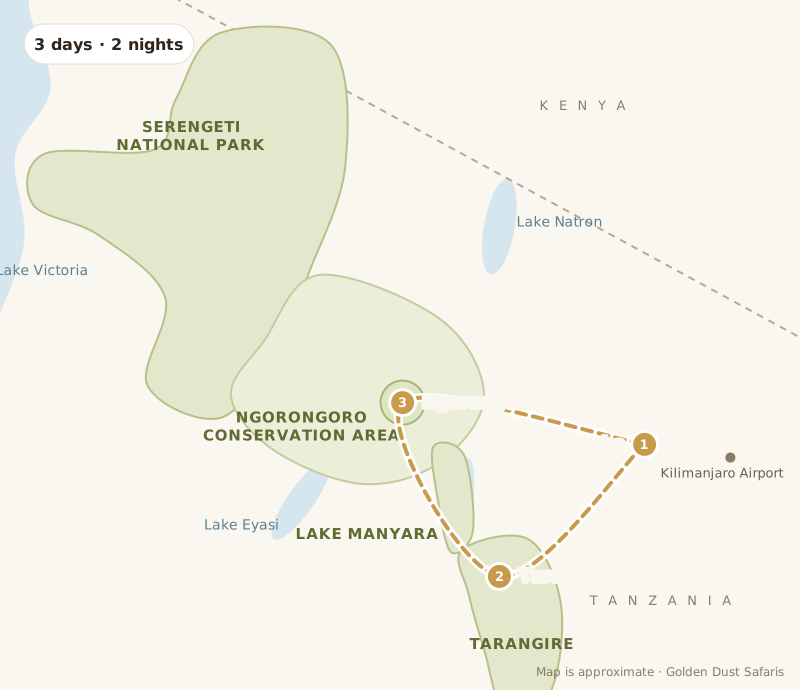
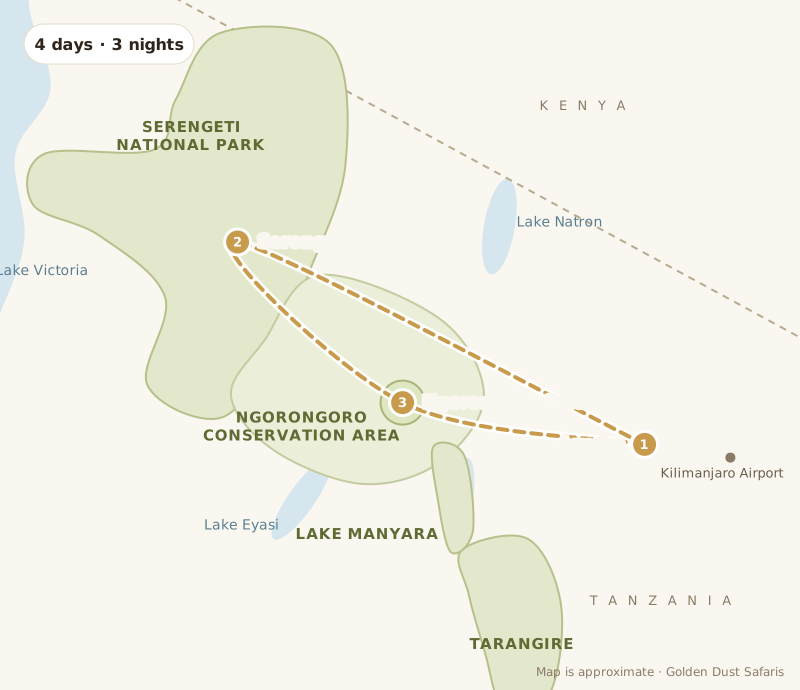
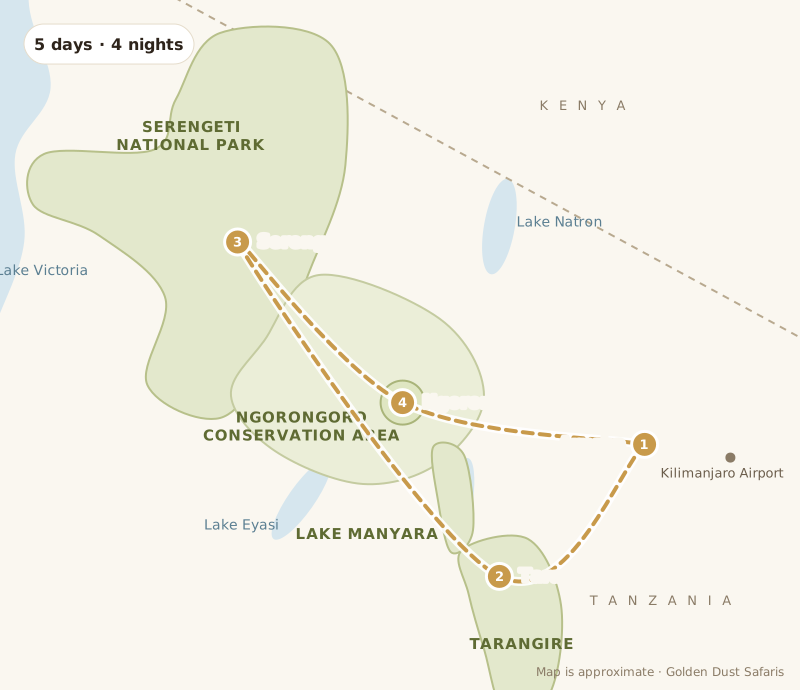
Every vehicle pays a crater service fee to drive onto the floor, on top of the Conservation Area fee per person. When a trip in our planner includes a night at Ngorongoro, the crater game drive is always included.
Rim or Karatu?
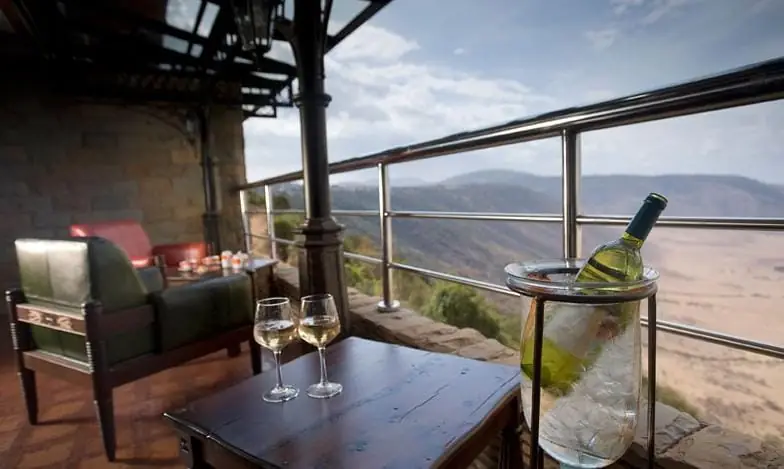
You can sleep on the crater rim, high above the floor, or in Karatu, about half an hour from the Conservation Area gate. The rim puts you closer to the crater, the views are spectacular and you get down early. Karatu is cheaper and warmer, and there are no Conservation Area fees for the night.
The rim is over 2,000 m high, so nights are cold all year. Bring a warm jacket.
When to go
The crater is good all year, because the animals don't migrate out. June to October is dry and busy. The rainy months are quieter and very green. Whatever the month, arriving early beats the crowds.
Where to stay
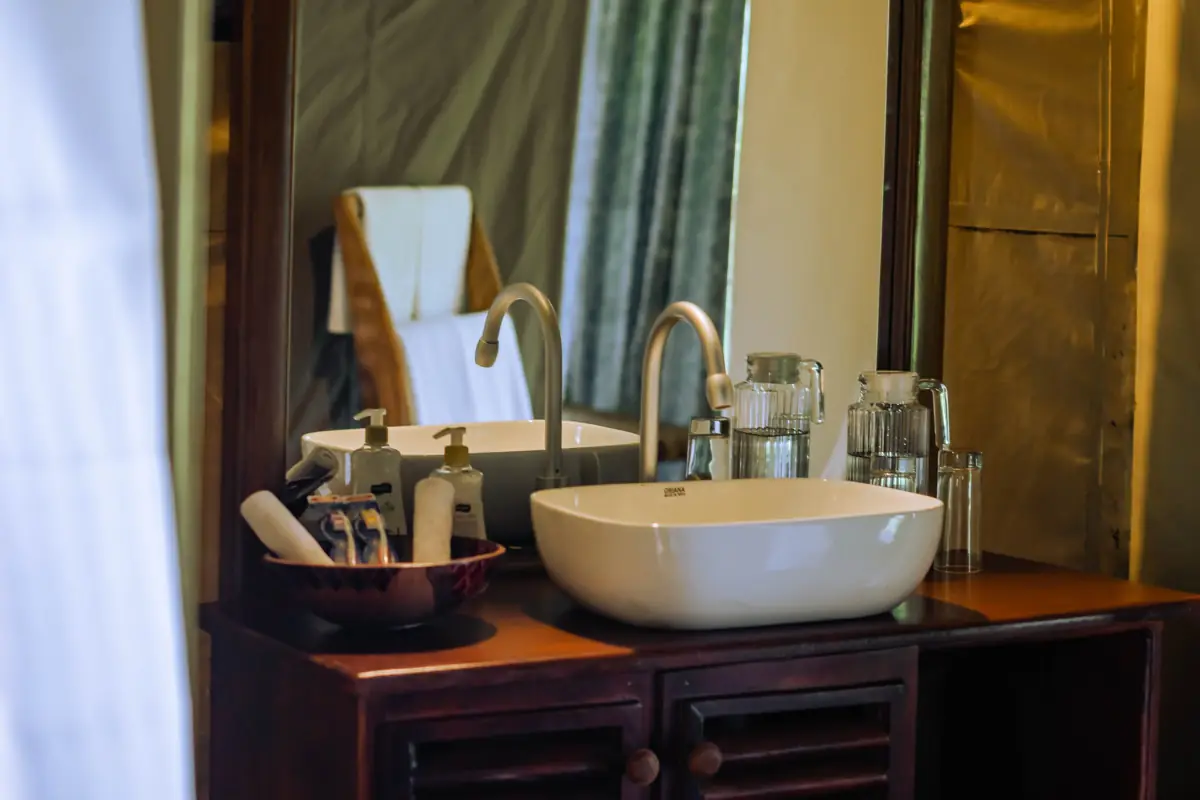
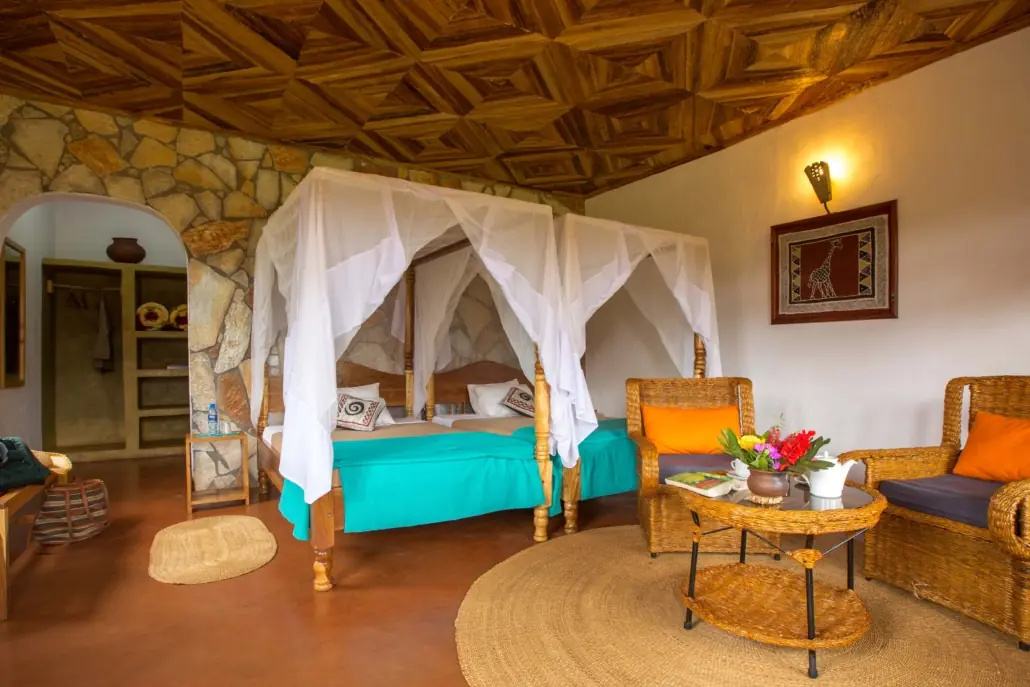
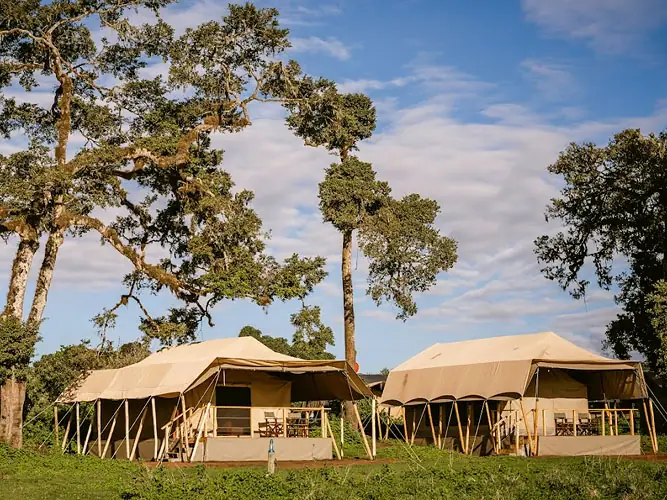
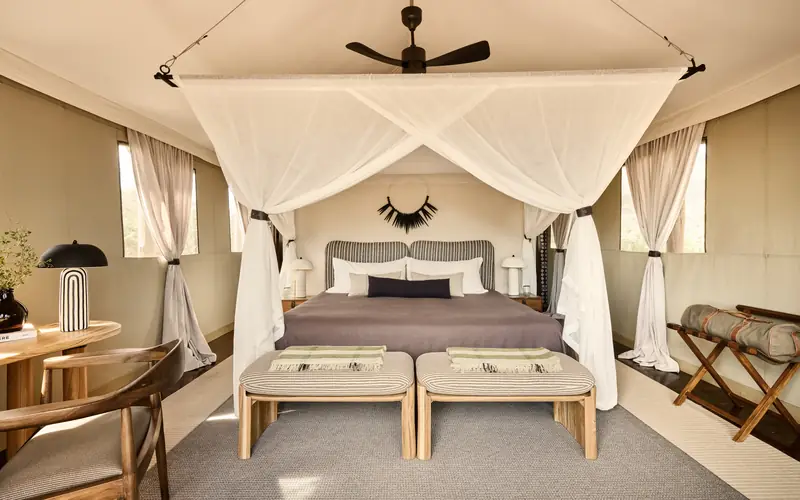
These are the rim camps and lodges we work with. The Simba public campsite on the rim is the budget choice.
Budget option: Simba Public Campsite (Ngorongoro).