The Great Migration, month by month
Well over a million wildebeest, with zebras and gazelles, circle the Serengeti every year following the rain. Here's where they usually are, so you can pick your month and your camps.
The migration isn't a single event. It's a loop that never stops, and the timing changes every year with the rain. Treat the months below as a guide, not a timetable. Before you book, we check where the herds are and suggest camps close to them.
| Month | Where the herds usually are | What's happening |
|---|---|---|
| January | Southern Serengeti and Ndutu | The herds settle on the short-grass plains in the south. Calving starts. |
| February | Southern Serengeti and Ndutu | The peak of the calving season. Lots of predator action around the herds. |
| March | Southern Serengeti and Ndutu | Calving continues. The calves grow stronger and the herds start to gather. |
| April | Moving north-west through the central Serengeti | The long rains. The herds leave the plains and spread out. Quiet and green. |
| May | Central and western Serengeti | Long columns of wildebeest on the move. The rut begins. |
| June | Western corridor | The herds reach the Grumeti River, and the first crossings can happen. |
| July | Western and northern Serengeti | Most herds head north. The Mara River crossings can start late in the month. |
| August | Northern Serengeti | Mara River crossing season. Some herds move into Kenya's Maasai Mara. |
| September | Northern Serengeti | Crossings continue, back and forth across the Mara River. |
| October | Northern Serengeti | The herds start drifting south as the short rains approach. |
| November | Eastern and central Serengeti | The short rains bring fresh grass, and the herds move south. |
| December | Southern Serengeti and Ndutu | The herds arrive back on the southern plains, ready to calve. |
Calving season: January to March
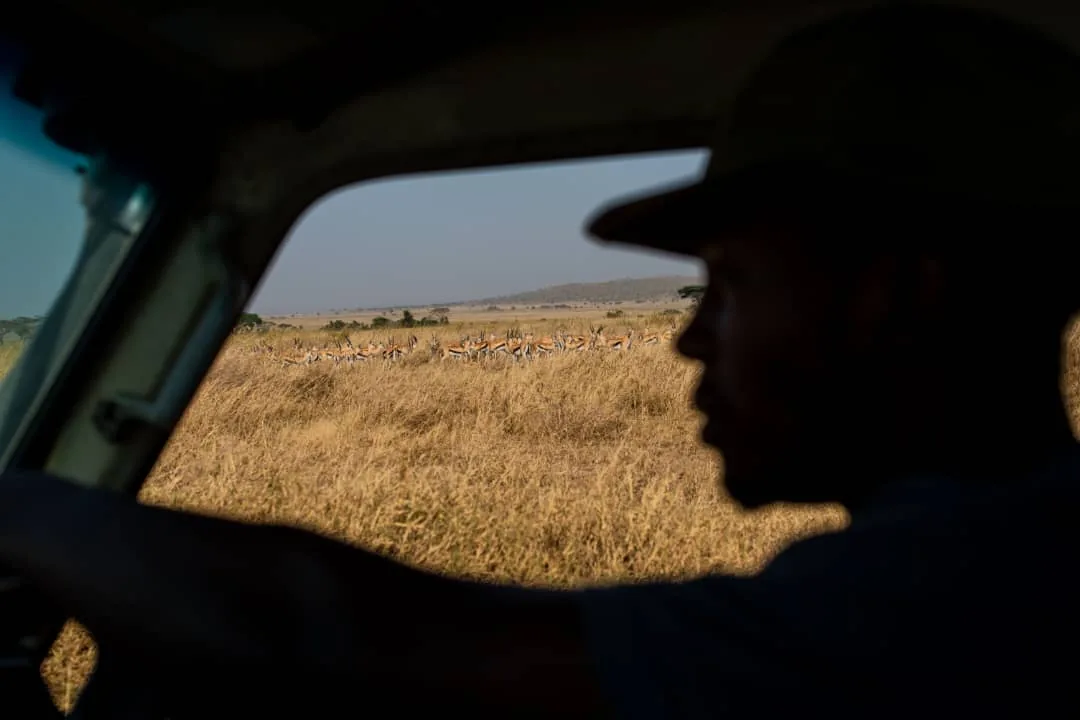
On the short-grass plains of the southern Serengeti and around Ndutu, a huge number of calves are born within a few weeks. Lions, cheetahs and hyenas follow the herds, so it's one of the best times of year for predators. It's also quieter and cheaper than the July to October peak.
River crossings: June to October
The Grumeti River in the western corridor comes first, around June. From about July, the herds reach the Mara River in the far north, where the famous crossings happen. The north is a long drive from Arusha, so we plan at least two nights there, or a flight.
The rest of the year
In April and May, the long rains turn the park green and the herds spread out across the central and western Serengeti. In November and December they head south again. These months are the quietest, and the resident wildlife of the central Serengeti is there all year.
See also our Serengeti guide and the best time to visit Tanzania.